Restore Your Attic After Wildlife Damage and Contamination
Wildlife Solutions and Trapping provides attic restoration services that remove contaminated insulation, sanitize surfaces, and restore attic spaces after raccoons, rats, or bats have nested inside homes in Redondo Beach, California.
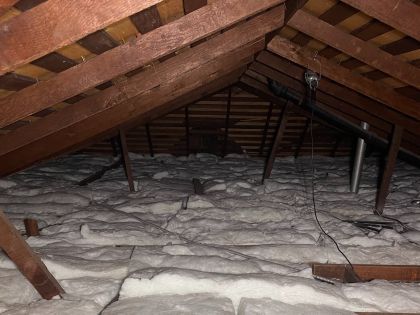
Wildlife Solutions and Trapping handles attic restoration after animals have lived in your attic long enough to damage insulation, leave droppings, or create nesting areas. You may have already had the animals removed but are left with a strong odor, stained ceiling boards, or insulation that has been shredded and soiled. Attic restoration involves removing contaminated materials, cleaning and disinfecting all surfaces, and replacing insulation so that the space is safe, odor-free, and energy-efficient again.
Animals get into attics through gaps in roof vents, deteriorated fascia boards, openings around plumbing stacks, and damaged soffit screens. Raccoons tear through weak spots in roofing or pry up shingles near the eave. Rats chew through plastic vent covers or squeeze through gaps as small as half an inch. Bats enter through cracks in gable vents or where trim boards have separated from the roofline. Once inside, they use insulation for nesting material, urinate and defecate in concentrated areas, and create pathways that compress and displace the insulation. In Redondo Beach, older homes with original attic vents and wood fascia are particularly vulnerable because the materials deteriorate faster in the coastal climate. Prevention is important because even after animals are removed, the entry points remain open unless they are sealed, which allows reentry and repeated damage.
If your attic has been used by wildlife and you need the space cleaned and restored, contact Wildlife Solutions and Trapping to assess the damage and plan the restoration work.
Redondo Beach, CA 90278
Hours
- Mon - Sun
- -
Phone
What Attic Restoration Includes
You begin with a full inspection to identify contaminated areas, assess insulation damage, and check for structural issues such as chewed wiring or damaged ductwork. All soiled insulation is removed and bagged. This often includes blown-in cellulose or fiberglass batts that have been flattened, soaked with urine, or mixed with feces and nesting debris. The attic floor, rafters, and any stored items are treated with an enzyme-based cleaner or disinfectant that breaks down organic matter and neutralizes odors.
After cleaning, Wildlife Solutions and Trapping installs new insulation to the recommended R-value for your climate zone. You will notice that the odor is gone, the attic temperature is more stable, and there are no visible stains or droppings. Air quality improves because contaminated dust is no longer circulating through your HVAC system. The attic becomes usable again for storage, and your heating and cooling costs often decrease once insulation is restored to proper depth and coverage.
Attic restoration does not include roof repair, electrical work, or HVAC servicing, though any damage observed during the process is documented. If animals chewed through wiring or tore ductwork, those repairs are handled separately by licensed contractors. The restoration service also does not include sealing entry points unless it is added as part of the scope. Exclusion work is recommended immediately after restoration to prevent animals from returning.
Common Concerns About Attic Restoration
Homeowners want to understand what the process involves and whether it is necessary after an animal infestation.
What health risks come from contaminated attic insulation?
Droppings and urine can contain bacteria, parasites, and fungal spores that become airborne and circulate through your home, leading to respiratory irritation and illness.
How long does attic restoration take?
Most residential attic restorations take one to two days depending on the size of the attic, the extent of contamination, and the type of insulation being installed.
What type of insulation is used during restoration?
Blown-in fiberglass or cellulose is most common because it fills gaps evenly and can be installed quickly over large attic spaces.
Why does the smell linger even after animals are removed?
Urine soaks into insulation and wood, and the odor does not fade until the contaminated material is removed and surfaces are treated with a neutralizing cleaner.
How does coastal weather in Redondo Beach affect attic entry points?
Salt air accelerates rust and rot in metal vents, wood trim, and screens, which creates weak points that animals can exploit more easily than in drier inland areas.
To restore your attic and make it clean and safe again after wildlife activity, contact Wildlife Solutions and Trapping for an inspection and a detailed restoration plan in Redondo Beach.